
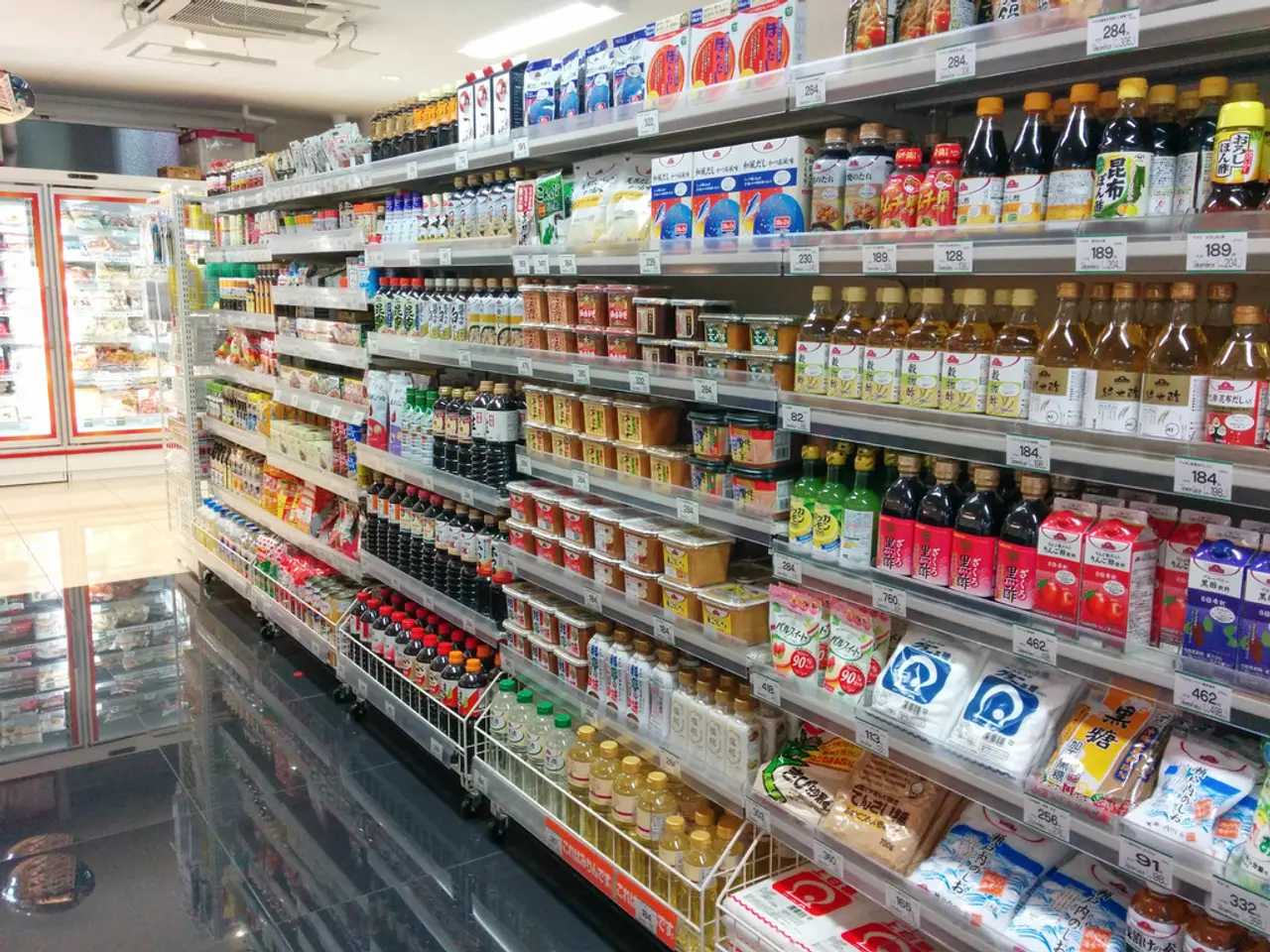
Decline persists for third consecutive week according to Rosstat's data
In the week from July 29 to August 4, 2025, Russia witnessed a continuation of price moderation in food and non-food goods, while services inflation remained elevated.
Food prices showed signs of softening or slower growth, with a monthly decrease of 0.6% and an annual inflation rate of 10.8%. This was particularly evident in fruits and vegetables, where price growth decelerated significantly from around 19.8% to 15.3% annually.
Meanwhile, services prices remained relatively high, with an annual increase of about 11.9%. Non-food goods inflation softened further to around 4.1% annually, with a slight monthly increase of 0.2% noted.
Overall inflation eased to 8.8% year-on-year in July, after 9.4% in June, reflecting a continuing trend of inflation deceleration supported by currency appreciation (Ruble gained ~4% vs USD from May to July) and moderated inflation expectations.
Housing costs in state and municipal housing funds increased slightly, by 0.2%. Prices for pork, buckwheat, meat preserves, dry milk mixes for baby food, and groats have increased in the food group. Some medications, including levomekol, trecrezan, lizobakt, pentaglign, analgin, nimesulide, activated charcoal, and valerian, have become more expensive.
On the other hand, potatoes have decreased by 10.8%, white cabbage by 9.7%, beets by 9.6%, carrots by 8.4%, onions by 6.3%, tomatoes by 6%, bananas by 2.5%, and apples by 0.4%. Prices for rice, eggs, boiled sausages, fruit and berry preserves for baby food, lamb, pasteurized milk, sour cream, granulated sugar, vegetable preserves for baby food, cookies, and black tea have decreased by varying amounts.
Prices for diapers, children's and laundry detergents, household soap, dry pet food, toilet paper, and hygiene pads have decreased in the non-food essential goods category. Tram fares increased by 0.2%, bus fares by 0.3%, and trolleybus fares by 1.1%.
The Bank of Russia attributes the slowdown in the pace of price increases to tight monetary policy, which has kept non-food prices and the currency stable, albeit at the cost of slower economic growth dynamics, especially outside military sectors. By the end of the third quarter, the Central Bank expects inflation to fall to 8.5%. According to the forecast, inflation will slow to 6-7% by the end of 2025.
Inflation for the month to date is 0.07%, and the annual inflation rate in Russia for the second quarter of 2025 was 9.4%. Cucumber prices have increased by 0.3%, while prices for fruits and vegetables, excluding cucumber, have decreased on average by 4.6%.
This moderation in inflation is a positive sign for consumers in Russia, indicating a potential easing of financial pressures in the coming months. However, the elevated services inflation continues to contribute to ongoing but slower inflation pressures in Russia's consumer market.
Finance-related activities remained relatively stable during the week from July 29 to August 4, 2025, due to the Bank of Russia's tight monetary policy, which kept non-food prices and the currency stable, albeit at the cost of slower economic growth dynamics. This policy is expected to help lower inflation to 8.5% by the end of the third quarter, and potentially slow down to 6-7% by the end of 2025. Meanwhile, some essential goods and services, such as diapers, soap, laundry detergents, and transportation fares, have become more expensive, which might add pressure on consumers' finances.




