
Expansive Artificial Lake in Europe Faces Crisis in Tourism Industry
Transforming the Lusatian Landscape: A Sustainable Tourism Haven
In eastern Germany, a remarkable transformation is underway. The Lusatian Lake District, once a scarred landscape from decades of strip mining, is now being regenerated into a vibrant eco-tourism destination. This project, known as the Lusatian Lake District regeneration, is addressing significant challenges related to environmental degradation, economic transition, and infrastructure development.
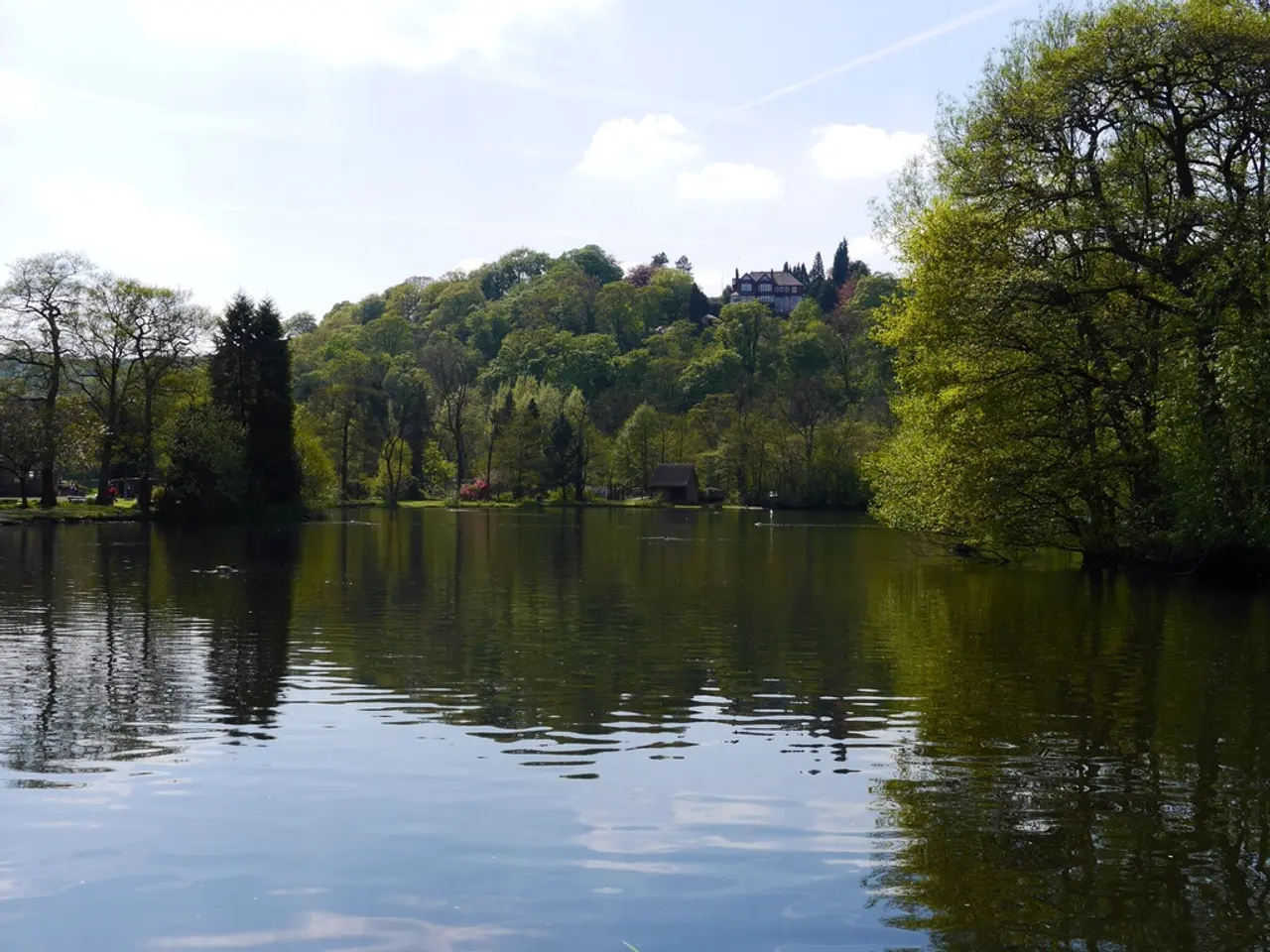
The heart of the regeneration lies in the creation of Europe's largest artificial lakeland. A $2 billion investment program has converted 26 former mining pits into these lakes, 13 of which are open to the public. This network of lakes, stretching over 300 miles, offers a thriving biodiversity, with over 80 bird species on the protected island in Lake Senftenberg.
The region's regeneration is not just about water bodies. Authorities have also focused on creating a cycle path network and opportunities for eco-tourist activities such as fishing, diving, horseback riding, and beach recreation. Ecological restoration efforts have been successful in bringing back native species, including wolves, Eurasian hoopoe birds, and plants like great horsetail, supporting biodiversity recovery in the area.
Visitors can take in the breathtaking views from the "Rusty Nail" observation tower, a symbol of the region's transition to sustainable energy. This installation offers panoramic vistas of the regenerated landscape, nearby forests, and wind energy installations.
The balance between sustainable energy, burgeoning tourism, and environmental preservation is a complex challenge in the Lusatian Lake District. Heinz Mueller, a former engineer, explains, "This region's transformation is a natural example of sustainability." The region is transitioning into a service economy, with tourism at its heart.
Accommodations in the region range from simple campsites to luxury resorts like the Seeschlößchen Ayurveda Spa & Hotel. This four-star resort offers a 5,000-square-meter spa, a heated outdoor pool, and a culinary approach blending Lusatian and Ayurvedic cuisines.
The acidity of the lakes was a major challenge during the transformation, requiring flushing with river water or the addition of limestone to raise the pH levels. As Germany phases out coal energy production by 2038, the Lusatian Lake District aims to increase overnight stays from 930,000 to 1.5 million per year.
The Lusatian Lake District's answers to these challenges regarding sustainable development and climate change may emerge by 2038. Animals and plants driven from other intensively farmed European landscapes, such as wolves, the Eurasian hoopoe bird, and great horsetail, are reclaiming these areas, making the Lusatian Lake District a beacon of sustainability and resilience.
- Science plays a crucial role in the Lusatian Lake District's regeneration, as experts work to address challenges such as acidity in the lakes and the phaseout of coal energy.
- With a focus on sustainability, the region's power is transitioning from coal to green energy, such as wind installations, as seen from the observation tower known as the "Rusty Nail".
- The Lusatian Lake District's work in environmental restoration and renewable energy is contributing to the fight against climate change, making it a shining example in the industry of environmental science.
- As the Lusatian Lake District develops its tourism industry, financial investments are being made in luxury accommodations like the Seeschlößchen Ayurveda Spa & Hotel, offering visitors a unique experience blending eco-tourism and environmental conservation.




