
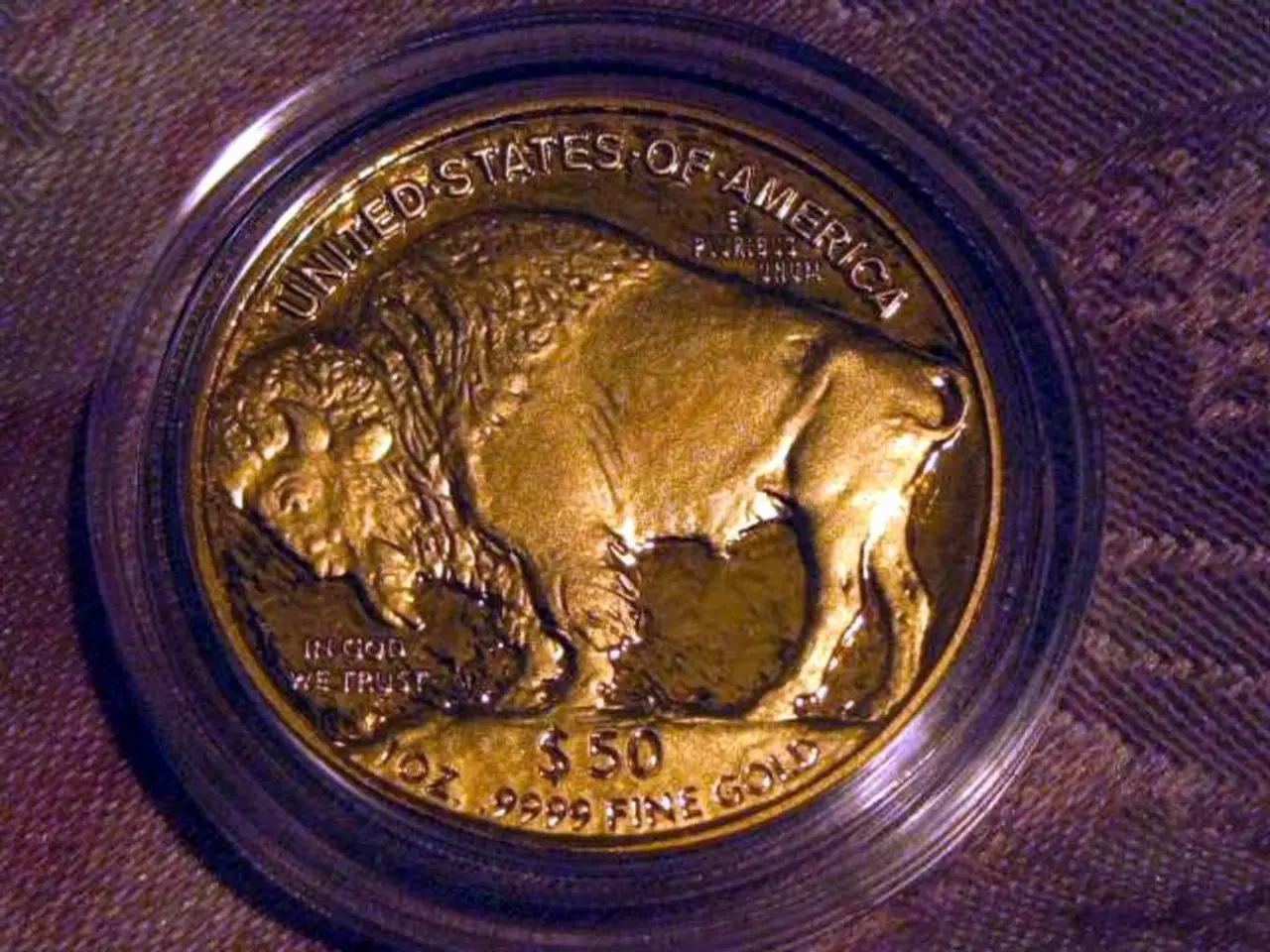
Financial Experts Stand as the Obstacle for Reinstating the Gold-Backed Currency System
In a recent event titled "The Debt, the Dollar, and Our Options From Here," organised by Confusion Capital in Washington D.C., the conversation revolved around potential solutions for a potential dollar crisis. One proposed solution was the reinstatement of the gold standard for the U.S. dollar, a concept that has gained traction among some economists and policymakers.
The gold standard, historically, helped maintain stable exchange rates between countries by pegging currencies to a fixed quantity of gold. This stability reduced uncertainty in international trade and investment, making cross-border business more predictable and efficient. Proponents argue that reinstating the gold standard could enhance the stability of the U.S. dollar, bolster global trust in the currency, and reduce risks inherent in fiat currencies, potentially fostering more robust and stable economic growth worldwide.
By tying the money supply to gold reserves, governments would be constrained from printing excessive money, which can lead to inflation or hyperinflation. This discipline can theoretically maintain long-term price stability. Moreover, the gold standard could prevent governments from devaluing the currency or causing runaway inflation, protecting the currency's purchasing power over time.
Periods when the gold standard was in place often saw relatively stable domestic prices and international balance. It helped countries avoid conflicts between fixed exchange rates and price instability in calm economic periods, potentially supporting steady growth and borrowing costs.
Recently, many emerging market central banks have increased their gold holdings as they seek alternatives to fiat currencies, reflecting a desire for more stable, tangible reserve assets amid global financial uncertainty. This trend suggests a renewed confidence in gold’s role as a stable store of value.
However, it is important to note that most economists today are skeptical about the gold standard’s practical benefits. They highlight significant downsides such as limiting monetary policy flexibility, exacerbating economic recessions, causing deflationary pressures that hurt debtors, and uneven economic effects due to the distribution of gold reserves. These criticisms imply that while the gold standard offers certain theoretical advantages for currency stability, its impact on sustainable economic growth may be limited or even negative in times of economic shocks.
If Treasury secretary Scott Bessent were to announce a plan for substantial currency-price stability by tying the dollar's value to a fixed amount of gold, many countries might follow suit by pegging their currencies to gold through their existing dollar pegs. In a dollar pegged to gold scenario, dollars circulating could skyrocket due to reduced need for currency hedging.
The growth of cryptocurrencies, particularly stablecoins, is largely tied to the U.S. dollar. If the dollar were to be defined by gold, the impact on these digital currencies would be significant. Savers might invest more in equities representing wealth that doesn't yet exist under a gold-defined dollar. However, the limit to money in circulation would still be production, not a dollar tied to gold.
In conclusion, the debate over the gold standard is complex and multifaceted. While it offers potential advantages in terms of currency stability and global economic growth, its practical implications and impact on sustainable economic growth are subjects of ongoing debate among economists. The perceived irrelevance of economists and the influence of global financial uncertainty could potentially pave the way for a reconsideration of the gold standard in the future.
John Tamny, Scott Bessent, and others discussed the potential reinstatement of the gold standard for the U.S. dollar as a solution for a potential dollar crisis at a recent event. This idea, while debated among economists, could improve the stability of the U.S. dollar, bolster global trust, and reduce risks associated with fiat currencies, potentially fostering more robust business and economic growth worldwide. The gold standard, if implemented, could also balance the money supply, maintain long-term price stability, and prevent governments from devaluing the currency, thus protecting its purchasing power.




