
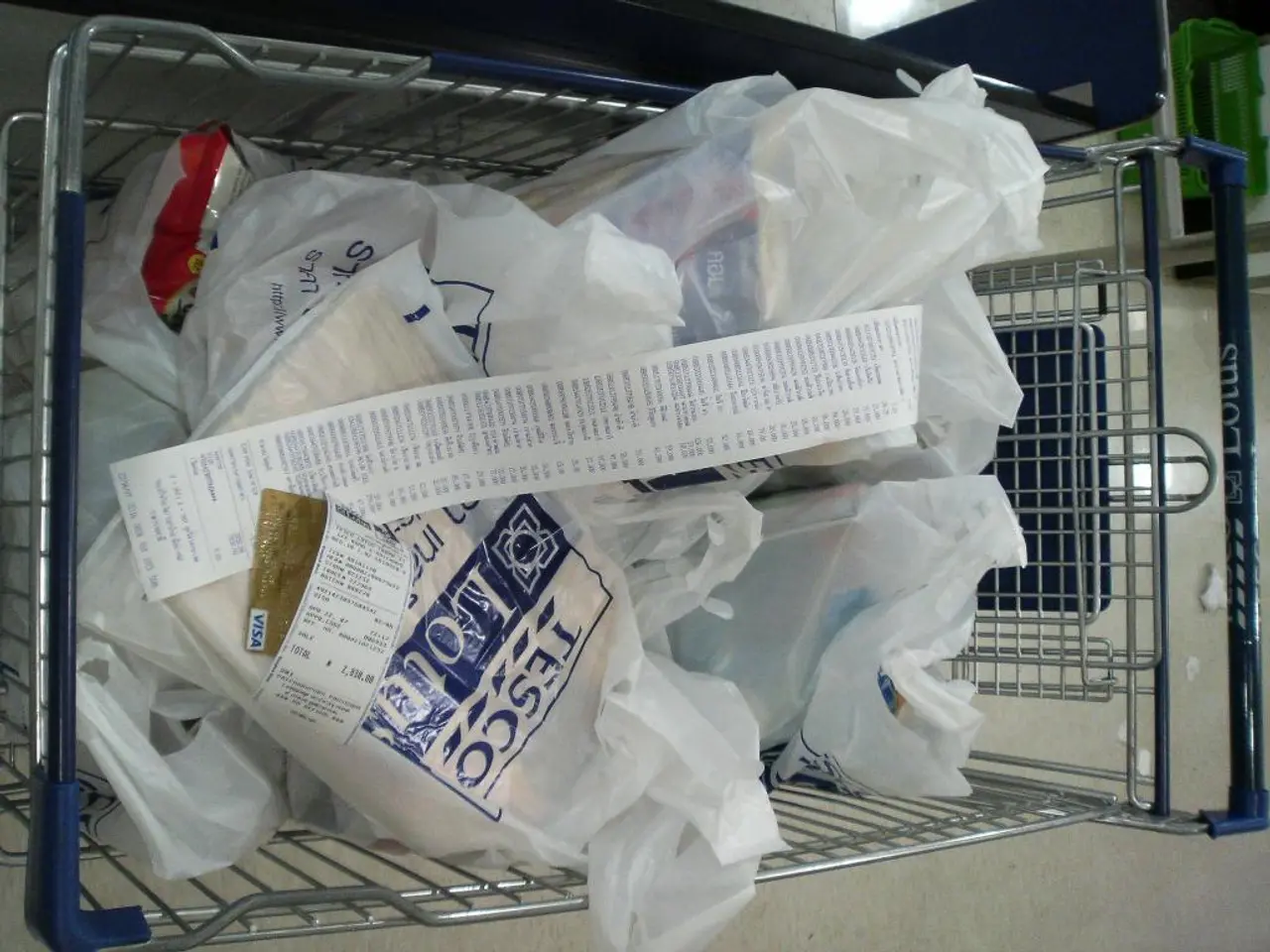
Holiday shoppers resort to accruing credit card debt and employing Buy Now Pay Later (BNPL) services to cover their spending.
Holiday Shopping Trends for 2022: Higher Prices, Strategic Spending, and a Shift Towards AI
As the holiday season approaches, retailers are gearing up for a challenging shopping period. A survey indicates that consumers will be choosier with their purchasing decisions this year, with more than a third (37%) of Americans considering buying gifts more important than their credit card balance [1].
One of the main factors influencing this trend is the current tariff situation. Retailers are facing uncertainty about product availability and pricing, which is complicating their ordering and holiday pricing decisions [1]. This uncertainty stems from President Trump’s variable tariff policies, which have led to fluctuating tariff rates and import costs, resulting in expectations of price increases and reduced product selection during the holiday shopping period [1].
Despite these pressures, some retailers are seeking to mitigate price hikes by stockpiling goods before tariff increases take effect. However, rising storage costs add additional financial pressure [2].
In response to these challenges, consumer behavior is shifting. Shoppers are starting holiday-related purchases earlier to avoid price increases and stock shortages, and they are prioritising essential categories and discount options [3]. Retailers are responding by offering more refurbished and alternative-brand items and targeted promotions to meet the growing price sensitivity among consumers [3].
When it comes to payment methods, sixteen percent of respondents will use ChatGPT or another AI tool for holiday shopping, while twenty-five percent plan to use buy now, pay later services for holiday spending [1]. Nearly half (47%) of respondents expect to spend most of their holiday purchases with Amazon [1].
Interestingly, consumers aren't shifting away from spending but are being strategic in their spending and affordability during the holiday season. This is reflected in the survey finding that consumers are willing to go into credit card debt and use buy now, pay later services to afford purchases this upcoming holiday season [1].
The survey also found that a third (32%) of respondents will shop at big-box retailers like Walmart and Target this holiday season, while eighteen percent plan to shop with small businesses [1]. Brands and retailers are divided on raising or maintaining prices during the holiday season. Walmart and Lululemon have warned of higher prices to cope with tariffs, while J.C. Penney and The Home Depot plan to hold their prices steady [1].
E.l.f. Cosmetics plans to increase its prices by $1, and there is a growing intolerance of price increases among consumers. Half of respondents stated they won't shop with retailers that increase their prices (up from 25% in 2024) [1]. To cope with these financial pressures, the majority of respondents to a recent Inmar Intelligence survey plan to reduce their spending on groceries and other necessities to cover their holiday expenses [1].
Looking ahead, it's clear that the 2022 holiday season will be marked by higher prices and fewer product options, largely shaped by tariff uncertainty and associated supply chain disruptions. However, consumers are adapting to these challenges by being strategic in their spending and embracing new payment methods like AI and buy now, pay later services.
References: [1] NPR. (2022). Retailers Prepare For Higher Prices And Fewer Options For The 2022 Holiday Season. NPR.org. [2] Reuters. (2022). Retailers Stockpile Goods To Avoid Tariff Hikes, But Rising Storage Costs Add Pressure. Reuters.com. [3] CNBC. (2022). Consumers Are Shopping Earlier And Being More Strategic This Holiday Season. CNBC.com. [4] Forbes. (2025). E-commerce Prices Have Not Uniformly Increased: Some Online Prices Have Fallen Recently. Forbes.com.
- In response to tariff uncertainties, retailers are facing challenges with product availability and pricing, complicating their ordering and holiday pricing decisions.
- Some consumers are prioritizing essential categories and discount options during the holiday season, while also being more strategic with their spending.
- The survey found that 16% of respondents will use AI tools like ChatGPT for holiday shopping, and 25% plan to use buy now, pay later services for holiday spending.
- In the fashion-and-beauty industry, E.l.f. Cosmetics plans to increase its prices by $1, but consumers are becoming increasingly intolerant of price increases.
- To cope with rising prices and few product options during the holiday season, many consumers plan to reduce their spending on groceries and other necessities to cover their holiday expenses.




%20services%20to%20cover%20their%20spending.)