
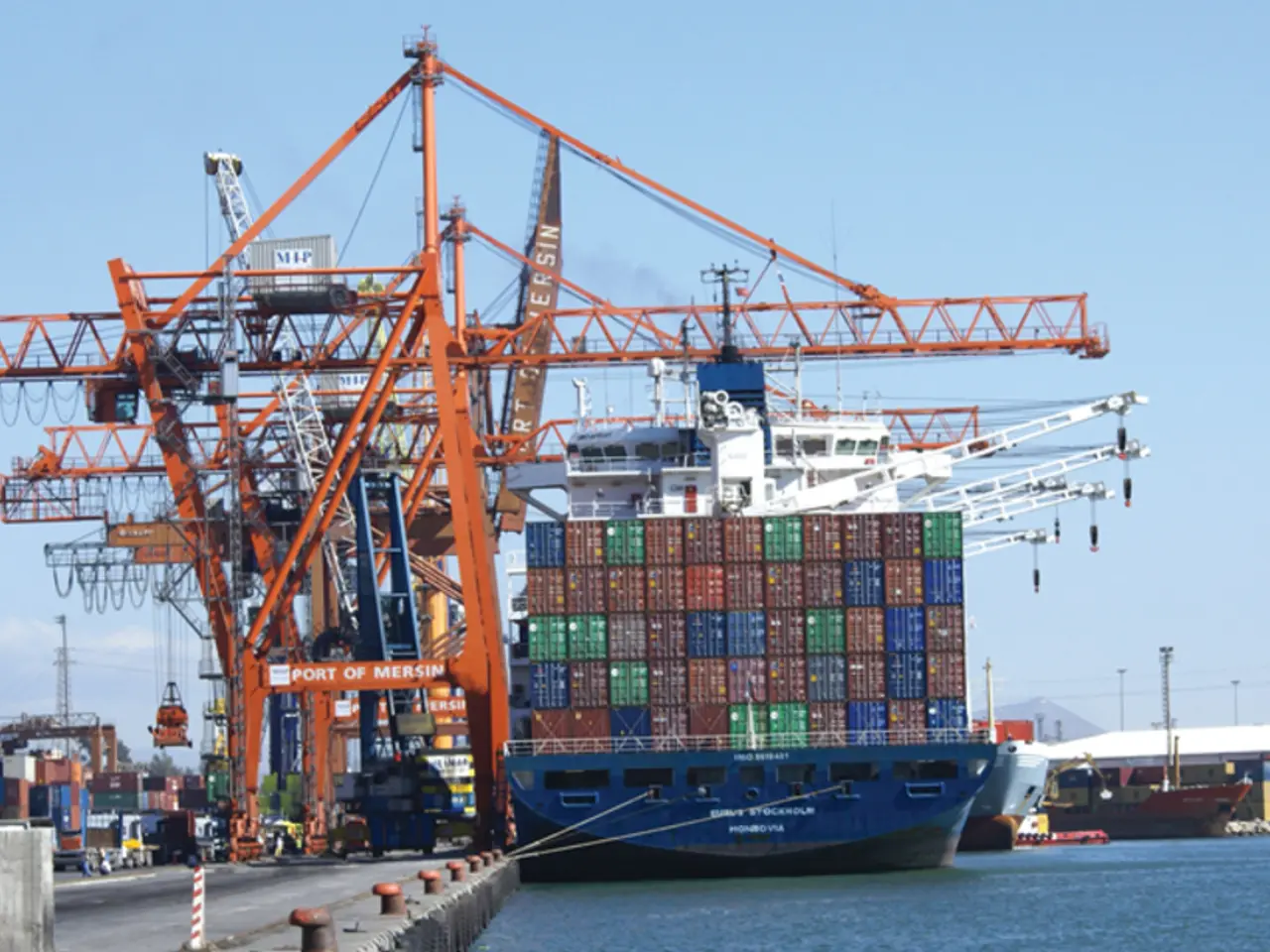
Importing companies hurriedly unloaded goods at the Port of LA, setting a new June record for the highest volume of cargo handled. The rush was due to importers aiming to beat the tariff deadlines.
### Tariff Impact on U.S. Imports and the Port of Los Angeles
In a dynamic trade landscape, the reciprocal tariffs on goods from China and other countries have significantly affected the Port of Los Angeles and overall U.S. imports.
#### Current Impact
In April 2025, the U.S. imposed extremely high tariffs on Chinese imports, reaching up to 145%, and reciprocal tariffs on other countries also rose sharply. This led to disruptions and delays at the Port of Los Angeles, a major entry point for imports, as importers adjusted to the new costs. As a result, import cargo volume at major U.S. container ports, including Los Angeles, experienced a double-digit drop during the late spring of 2025 [2].
However, following a tariff truce announced in May 2025, reciprocal tariffs were largely rolled back from April's peak levels. The U.S. and China agreed to reduce Chinese tariffs from 125% to 10%, plus the existing 20% fentanyl tariff, making the effective tariff on Chinese goods about 30% for a 90-day truce period (May 14 - August 12) [1][3]. Reciprocal tariffs on other trading partners were also temporarily frozen [4]. This truce triggered a surge in shipping activity, with container imports at U.S. ports, including Los Angeles, projected to increase year-over-year by 3.7% in the first half of 2025, and a notable 9% jump in shipping volume from China in early June 2025 [4].
#### Outlook After the Truce Ends
Despite the temporary easing, tariffs remain a major source of uncertainty. The truce is set to expire in August 2025, and President Trump has delayed reciprocal tariffs until August 1, 2025, but has also announced tariffs of up to 40% on more than a dozen countries [2][3]. This ongoing unpredictability influences importers' behavior.
The National Retail Federation warns that tariffs increase costs for U.S. companies and consumers and complicate planning, especially for small businesses [2]. It expects import cargo levels to rebound temporarily but drop again after tariffs are reinstated or raised. The overall impact on the Port of Los Angeles is a volatile and uneven import volume, with surges when tariffs are paused or rolled back, and declines when tariffs spike or are threatened. This volatility challenges port operations, supply chain management, and import-dependent businesses.
#### Summary
| Aspect | Effect | |-----------------------|----------------------------------------------------------------------------------------------------| | Tariffs on China | Peaked at 145% in April 2025, causing import declines; cut to 30% during May-August truce | | Tariffs on Other Countries | Raised substantially in April 2025, then partially paused in May truce | | Port of Los Angeles | Saw major import volume drop in late spring 2025; rebounded with shipping surge during tariff truce | | U.S. Imports Overall | Fluctuated with tariff policy; tariff uncertainty continues to hinder stable import planning | | Outlook | Possible import drop after tariff pause ends in August, ongoing volatility expected |
As the tariff situation unfolds, retailers are working hard to stock up for the holiday season before the various tariffs take effect. It is too late for retailers to try to negotiate orders at this point in time for the year-end (holiday) product. President Donald Trump initially set a deadline for reciprocal tariffs to end on July 9, but has since pushed that deadline to August 1. The tariffs set to increase in August will drive up prices for American consumers. The Port of Los Angeles had a record-breaking month in June, with an 8% increase in cargo compared to June 2019, and a 32% increase in cargo volume from May 2020 to June 2020.
- The business industry is closely monitoring the ongoing tariff disputes, particularly the tariffs on Chinese imports, as they have a significant impact on the finance sector and the general-news landscape.
- With the tariffs on Chinese goods reaching up to 145% in April 2025, it has become increasingly challenging for small businesses to maintain operations due to increased costs and planning complications, as warned by the National Retail Federation.
- Political decisions, such as the tariff truce announced in May 2025, play a critical role in the finance, business, and general-news industries, as they can either drive up or subsidize costs for importers, ultimately influencing the health of the economy and the overall business landscape.




