
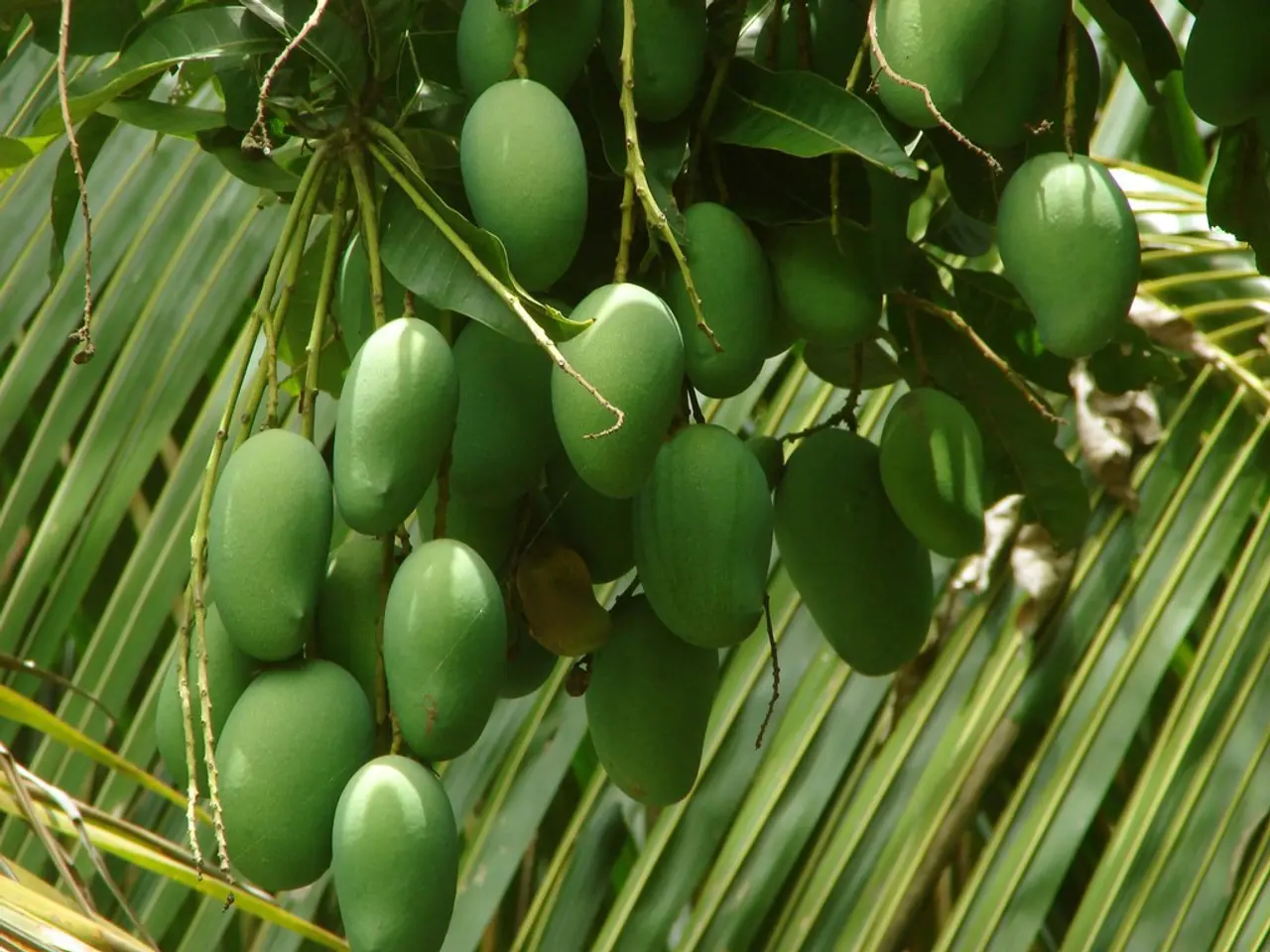
Instructions for New Indian Farmers on How to Start and Succeed in Mango Cultivation
Mango farming in India is a lucrative business due to the high demand for high-quality mangoes. If you're a first-time farmer considering venturing into mango farming, here are some key factors to consider.
Pruning, maintaining the shape of the tree, promoting healthy growth, and boosting fruit yield are essential practices in mango farming. When it comes to planting saplings, grafted mango trees mature more quickly and are more resistant to disease than seed-grown trees.
Mango trees require well-drained soil, plenty of sunlight, and space to grow. A suitable soil for mango trees ranges from slightly acidic to neutral (pH 6-7). It's recommended to plant saplings in a pit about one meter deep, filled with farmyard manure or compost.
Consistent irrigation is crucial, especially during dry seasons, but waterlogging must be avoided to prevent root diseases. Preparing the mango farmland involves clearing the land, assessing soil quality, and amending the soil as needed. Organic fertilizers such as compost, vermicompost, and farmyard manure are effective at boosting soil fertility and structure.
Micronutrients like magnesium, boron, and zinc are crucial for fruit development. Routine soil testing helps identify nutrient deficiencies.
Pest and disease control strategies should be planned early to maintain healthy trees. Common pests like aphids, fruit flies, and mealybugs can harm mangoes, while diseases like anthracnose and powdery mildew can impair yield. Integrated pest management (IPM) techniques can reduce chemical consumption.
Harvesting usually involves picking fruit in multiple rounds — starting with the largest mangoes and then subsequent waves of medium and smaller sizes — to maximize yield. Overripe mangoes can be damaged during handling or shipping, so it's important to harvest at the right time.
Effective marketing and selling strategies include identifying target audiences, partnering with local markets, using social media platforms, and offering value-added products. Mango trees require a balanced supply of essential nutrients, including potassium, phosphorus, and nitrogen.
The weather in the area where the farm is situated should be warm with temperatures between 24°C and 30°C and a clear dry season. Mangoes typically start bearing fruit 3-4 years after planting.
Popular types of mangoes in India include Alphonso, Kesar, Himsagar, and Langra. It's important to pick the right type of mango based on factors such as climate, soil type, and market demand.
By following these guidelines, first-time farmers can set themselves up for success in the mango farming industry. Proper farm management practices, suitable mango varieties for the local climate, and understanding market demand are essential for profitability and sustainability.
- For successful mango farming, it's crucial to manage both the farm and its finances effectively, considering the lucrative nature of the business.
- In addition to water management, planning the layout of a mango farmland wisely is essential, considering factors like soil quality, sun exposure, and spacing for tree growth.
- Apart from weather conditions, understanding the nutrient requirements of mango trees, such as potassium, phosphorus, and nitrogen, is integral to achieving high-quality, disease-free mango productions.




