
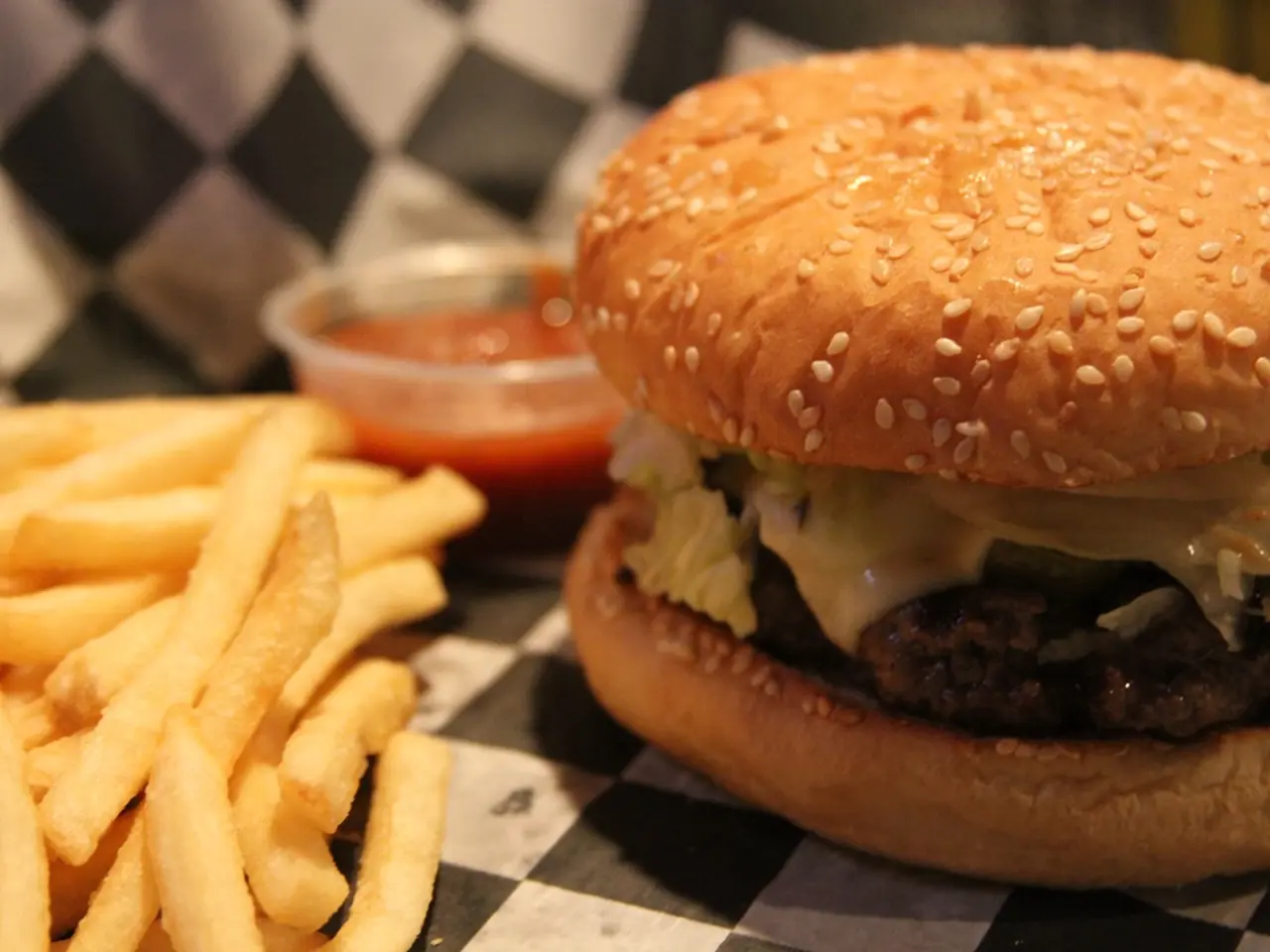
McDonald's eliminates 2,000 positions in the UK while netting almost double its profit
Fast Food Giants Expand and Innovate in the UK Market
The UK fast food sector is experiencing a surge of growth, with major chains such as McDonald's and KFC leading the competition through extensive expansion and investment plans.
McDonald's is embracing digital innovation to adapt to customer trends and foster growth. The company is investing in mobile ordering, delivery partnerships, and leveraging its large-scale supply chains and widespread brand recognition to maintain its market dominance. McDonald's aims to have 95% of its locations franchised, and is expected to continue opening new outlets and enhancing operational efficiency [1].
KFC, part of Yum Brands alongside Taco Bell and Pizza Hut, is also maintaining a strong UK footprint. The company's expansion strategies focus on convenience, menu innovation, and digital orders. More than 200 existing KFC restaurants will be upgraded as part of a £466m investment, with £404m earmarked for strengthening relationships with suppliers and helping UK and Irish businesses grow [1]. KFC plans to open a further 500 restaurants by 2035 and create more than 7,000 jobs in the UK and Ireland over the next five years.
Wingstop and Popeyes are relatively smaller and newer entrants in the UK market. Wingstop's expansion is more regional and niche-focused, while Popeyes, having entered the UK market more recently, is still in a growth phase with selective outlet openings. Both chains contribute to increased competition but on a smaller scale regarding store numbers and job impact compared to McDonald's and KFC [1]. Popeyes expects to create around 2,500 jobs and aims for sales of more than £200m in 2025, while outlining proposals to almost double its footprint in the UK with the opening of more than 45 restaurants.
The decrease in operating profit for McDonald's UK arm in 2024 was primarily due to savings in administrative expenses, an impairment of £41m, and continued inflationary pressures on food, paper, and utility costs. However, the arm posted a pre-tax profit of £120m in 2024, up from £66.3m in 2023. Operating profit surged from £10.7m to £75.5m in 2024. Despite shedding more than 2,000 jobs in 2024, the average monthly number of people McDonald's employed in the UK in 2024 was 24,375, down from 26,384 [1].
The trend of expansion and embracing new business models (e.g., delivery, ghost kitchens) suggests that employment in the sector will increase broadly, especially for the larger established brands. The UK fast food sector is thus experiencing intensified competition fueled by digital transformation, operational innovations, and strategic expansions, with the potential to create numerous jobs across these chains.
[1] Source: Various company reports and news articles.
McDonald's and KFC, leaders in the fast food industry, are utilizing digital finance and investment in order to capitalize on changing customer trends and bolster growth. McDonald's is pursuing mobile ordering, delivery partnerships, and leveraging its extensive business network to sustain its market dominance, aiming for 95% franchise ownership and expansion into new locations. KFC, part of the Yum Brands conglomerate, is investing £466m into upgrading existing restaurants and forming strong supplier relationships to maintain its UK footprint and open an additional 500 locations by 2035.




