
Carsten Schneider: Environment Minister - Internal Combustion Engines Aren't the Future
Internal Combustion Engines Bet Dogmatic: Minister's Stance Labeled as 'Absurd' - Ministry Official Denounces Use of Burners as "Ludicrous"
Federal Environment Minister Carsten Schneider (SPD) is all about phasing out fossil fuels, despite the agreements in the coalition treaty. "The move to clean heating systems and the goodbye to fossil fuels remains unchanged," Schneider stated to the "Süddeutsche Zeitung" on Monday. "But we must support folks in this transformation, especially those who can't afford it."
In the coalition treaty, the parties agreed to scrap the Heating Law. Although this may sound decisive, Schneider clarified, it won't make much of a difference in practice. It's all about tweaking the details.
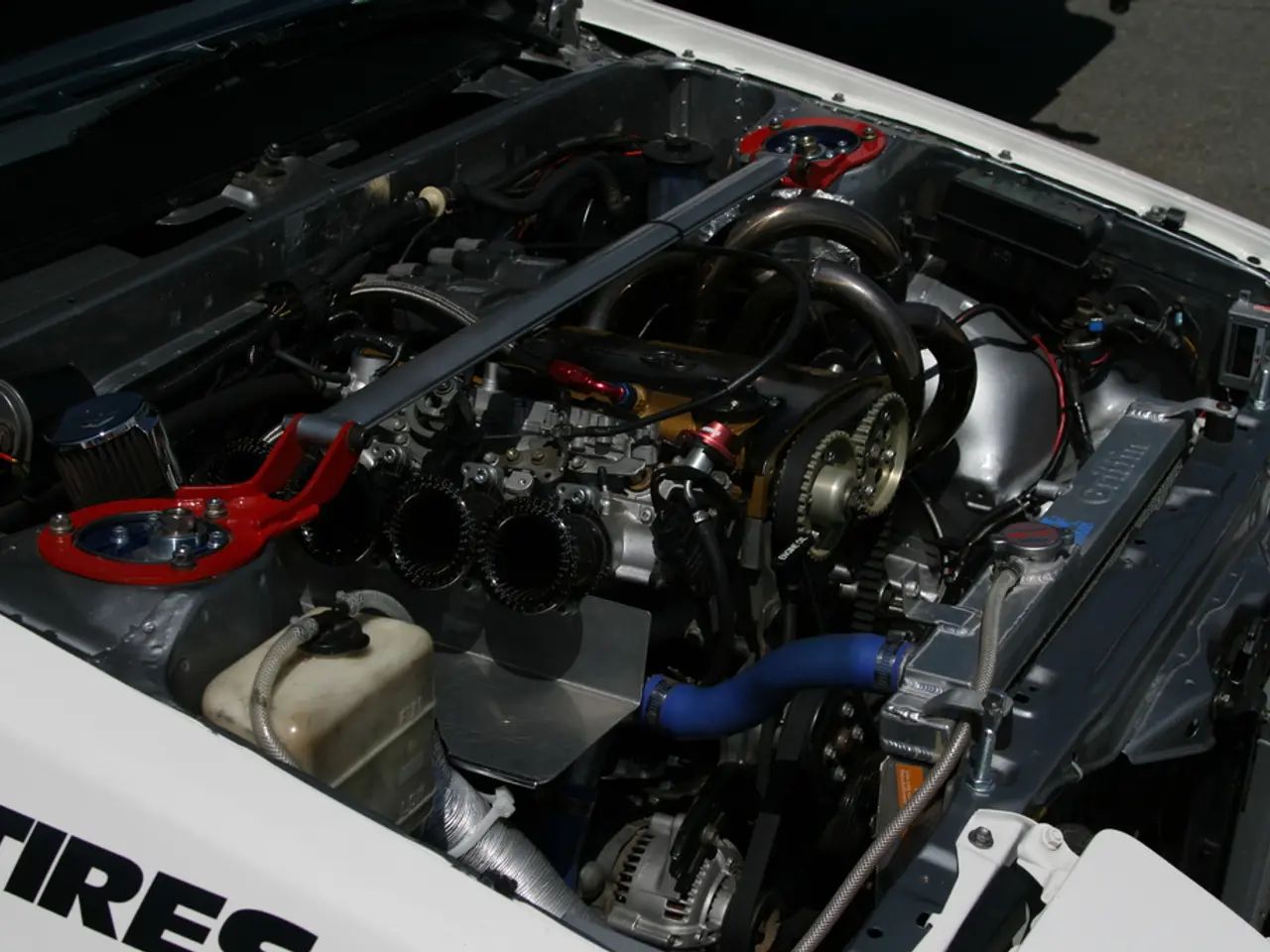
The farewell to the internal combustion engine won't be reversed either. This decision's been made, "not only by politics, but mostly by the world market," Schneider shared. "Yet, German manufacturers have missed the boat on development," he asserted. Relying on internal combustion engines again at this point is "absurd."
EU regulations mandate that only vehicles without CO2 emissions can be newly registered from 2035 - that's the end of internal combustion engines. This gives the German industry another ten precious years to catch up. "And I genuinely believe they can do it," Schneider said.
Not everyone agrees, though. Hildegard Müller, the president of the Association of the German Automotive Industry (VDA), voiced her concerns last week, claiming that bans stifle debate and force people to switch to alternatives they're not fully convinced by.
German car manufacturers, represented by the VDA, have expressed concerns regarding the EU's planned ban on the sale of new internal combustion engine cars from 2035. They argue that the current EU approach to phasing out combustion engines is too rigid, given the realities of market demand, infrastructure challenges, and technology development. As a response, the VDA is calling for a more flexible, technology-neutral approach to the transition, preserving combustion engine technology development and production in Europe, and supporting alternative fuels like e-fuels and biofuels.
This stance aligns with Carsten Schneider’s observation that German manufacturers might be lagging in fully embracing electric vehicle development and pushing to keep combustion technology relevant in the near future. Fueled by substantial investments in electrification, they seek a balanced approach that reconciles emissions reduction goals with technological diversity and economic competitiveness, advocating for a moderated regulation regime that allows some combustion engine vehicles, including those powered by cleaner fuels, to be sold after 2035.
- Carsten Schneider, the Federal Environment Minister, emphasizes the need for community aid to support individuals during the transition away from fossil fuels.
- Schneider's focus on clean heating systems and the phase-out of fossil fuels is a commitment to environmental protection, which is closely linked to the field of environmental science.
- Schneider acknowledges that the move away from internal combustion engines is not just a matter of political policy, but also a response to market trends in the automotive industry and science.
- The EU's mandate for zero-emission vehicles by 2035 presents a significant opportunity for the industrial sector, giving manufacturers a decade to catch up on renewable-energy technology.
- TheAssociation of the German Automotive Industry (VDA) has voiced concerns about the EU's approach to phasing out internal combustion engines, advocating for a more flexible, technology-neutral transition that preserves combustion engine technology and supports the development of alternative fuels.
- This debate about the future of the automotive industry and the role of internal combustion engines is a critical aspect of the general news, touching upon topics such as climate-change, energy, transportation, finance, and policy-and-legislation, which are all intricately interconnected.




