
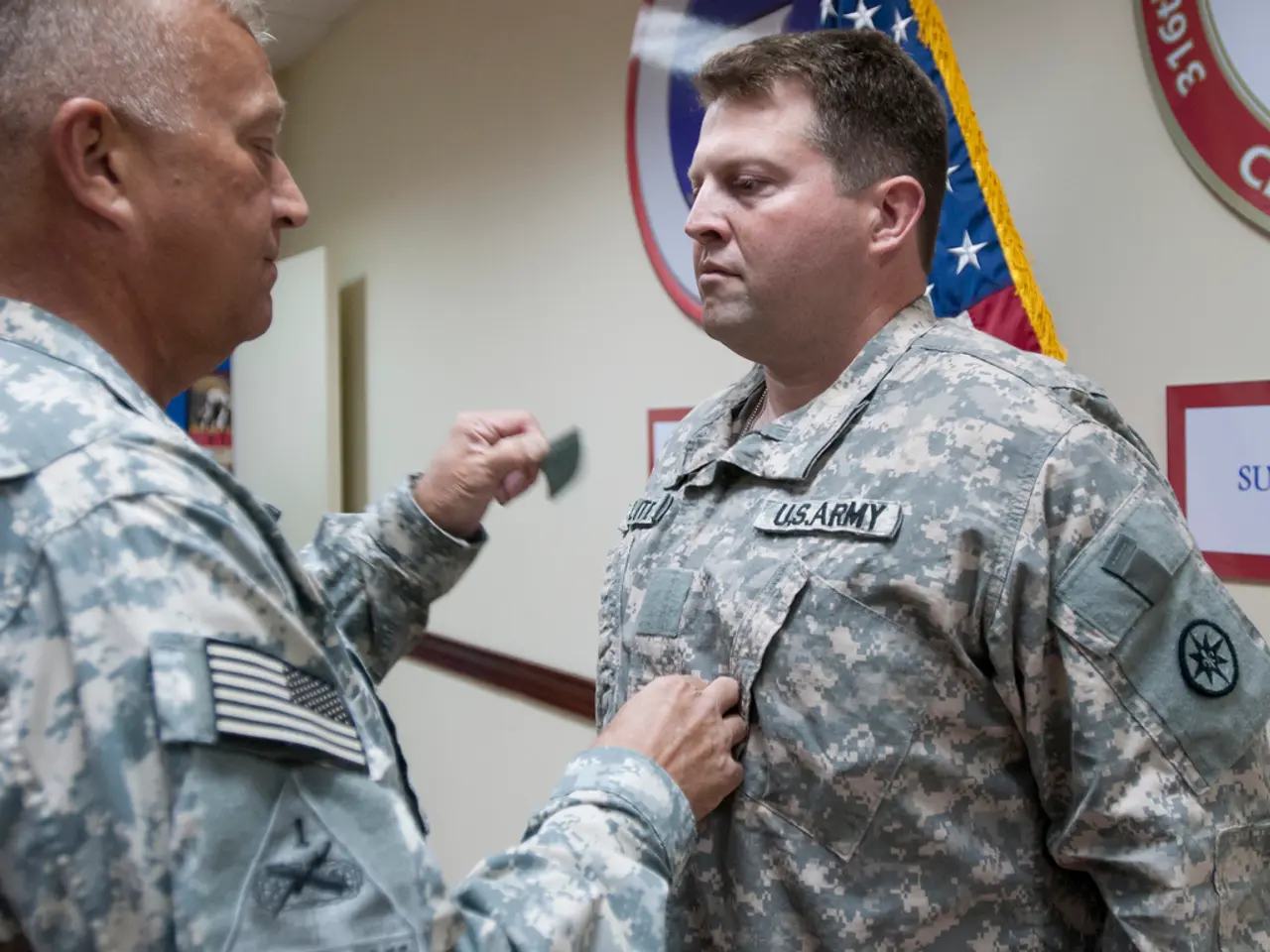
Recognitions and Honors in the Armed Forces
The Cold War Recognition Certificate is a prestigious honour awarded to members of the armed forces and qualified Federal government civilian personnel who served during the Cold War era from September 2, 1945 to December 26, 1991. If you believe you may be eligible, this article will guide you through the process of applying for the certificate and requesting relevant military records.
To begin, the Official Military Personnel File (OMPF) is used to verify awards to which a veteran may be entitled. However, this file becomes archival 62 years after the service member's separation from the military. Therefore, if a veteran separated from military service less than 62 years ago, they can request their DD-214 by writing to or requesting online from the National Personnel Records Center (NPRC).
For requesting military records, you typically need to provide the veteran's full name as used in service, service number and/or Social Security Number, branch of service, dates of service, date and place of birth (especially if the service number is unknown), place of discharge, last assigned unit, and place of entry into service.
To make a request, you should fill out Standard Form 180 (SF-180) and either mail or fax it to the NPRC. The NPRC will then process the verification and relay the award information to the appropriate service department for issuing medals or decorations. It is important to note that the NPRC does not issue medals but acts as a verification intermediary for the Air Force and Army (with some exceptions).
For Federal civil servants, if your employment ended before 1952, you can request your SF-50 online. If it ended after 1951, you can request your SF-50 by writing to or requesting online from the NPRC. The NPRC provides copies of both DD-214s (for military service personnel) and SF-50s (for Federal civilian personnel), which can be used to apply for the Cold War Recognition Certificate.
National Guard members should initially contact their State Adjutant General for records; if not available there, they may be referred to the NPRC. Additionally, you can access your DD-214 or other separation documents through eBenefits if you have a Premium account, which can facilitate verification.
It is worth mentioning that the process is free of charge through NPRC and other official channels. Processing time may vary but generally allows a few business days to a couple of weeks depending on mail and processing time.
Lastly, it is important to note that the NPRC does not supply the Cold War Recognition Certificate itself, nor does it have the application form available. You can find more information concerning the application process for the Cold War Recognition Certificate by searching the Internet for "Cold War Certificate Program - HRC Homepage". If a veteran separated from military service 62 (or more) years ago, they can request their DD-214 online.
In summary, submit a request with pertinent veteran information via SF-180 to the NPRC, which verifies Air Force and Army awards and forwards for medal issuance; direct medal replacement requests must be made to the respective military branch.
- Obtaining the DD-214 form is crucial for veterans who separated from military service less than 62 years ago, as it contains the information required to verify awards and apply for the Cold War Recognition Certificate.
- The NPRC provides copies of both DD-214s (for military service personnel) and SF-50s (for Federal civilian personnel), which are essential documents for applying for the Cold War Recognition Certificate.




