
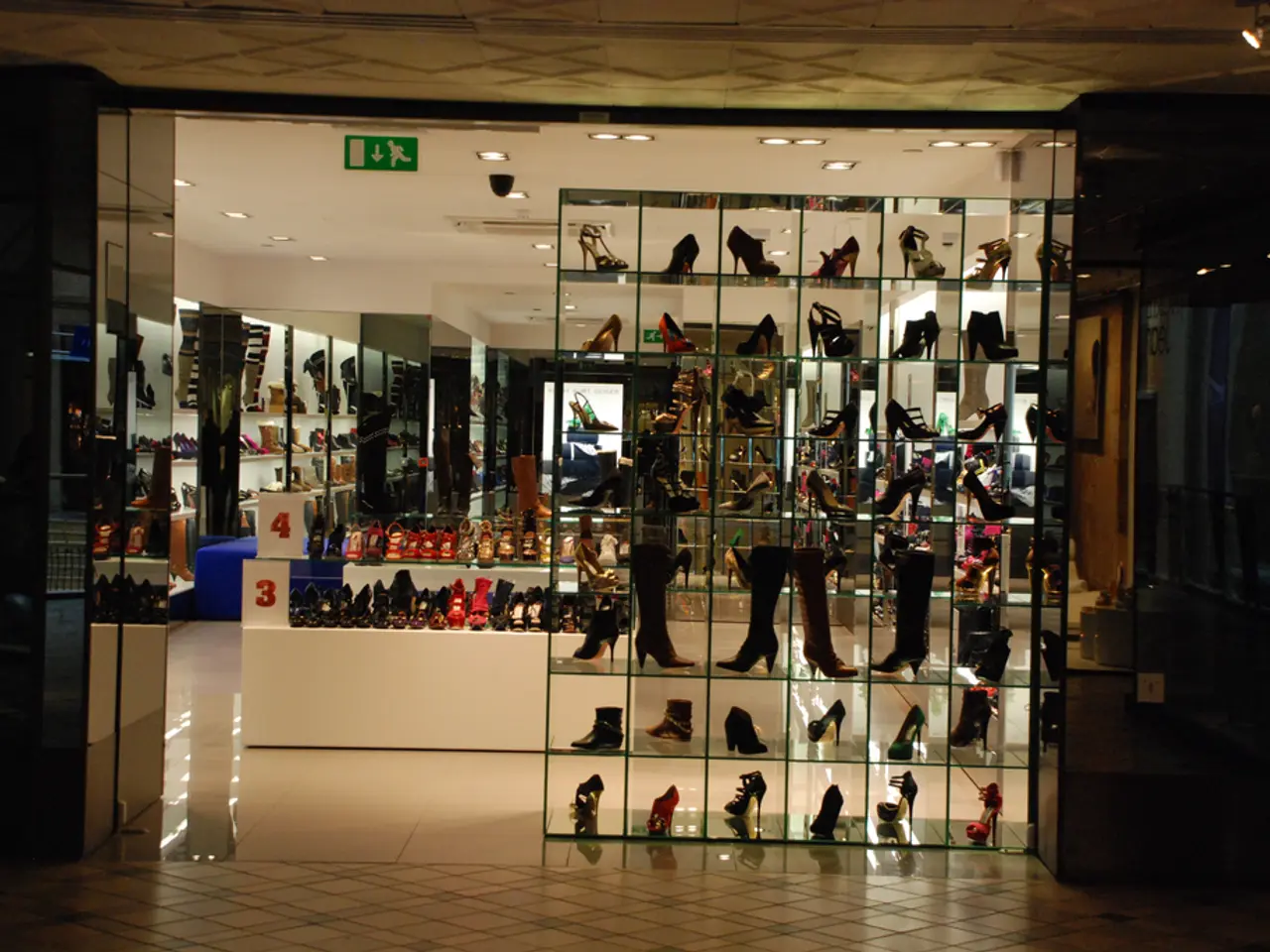
Retail parent company eyes potential shuttering of 65 DSW stores
In a bid to stay relevant in the ever-evolving retail landscape, Designer Brands, the company behind popular brands such as Designer Shoe Warehouse and Shoe Warehouse, has announced a strategic shift towards the growing athleisure market. This move comes as a response to the increasing demand for comfortable, casual, and versatile clothing, particularly as more people seek shoes and apparel that can be worn both for exercise and everyday activities.
Key aspects of this strategy include increasing inventory and marketing efforts around athleisure brands and styles, introducing new athleisure-focused product lines, repositioning stores to highlight athleisure merchandise, and enhancing their e-commerce platforms to better showcase these products.
The shift towards athleisure has proven beneficial for Designer Brands, with the category accounting for 46% of their sales by the fall of 2020. This focus has helped offset declines in other more formal or traditional footwear categories, contributing positively to the company's sales growth in 2021.
However, this strategic shift has not been without its challenges. The Camuto segment, focused on fashion footwear, "remains challenged" according to CEO Roger Rawlins. In response, the company has reduced its headcount at the Camuto brand by 25% and plans to sell more Camuto Group brands through DSW and grow those brands in its stores.
Despite the growth in athleisure sales, Designer Brands continues to close underperforming stores as part of a broader restructuring and cost-optimization effort. The closures are mainly focused on locations that do not meet sales targets or fit into the company’s strategic footprint, rather than being directly caused by the shift away from other footwear categories.
For the full year, net sales decreased 36% to $2.2 billion, and the retailer reported a net loss of $134 million for the fourth quarter and a net loss of $488.7 million for the full year. To address these financial challenges, Designer Brands has consolidated its business with fewer vendors and eliminated 1,000 positions over the summer, including 380 corporate staff and 700 store roles.
Looking ahead, Designer Brands plans to relaunch its J.Lo line with new products and is set to relaunch Vince Camuto, its largest brand, in the fall of this year. The company expects to close nearly 65 stores over the next four years as leases expire, with 24 locations to be closed in 2021.
In conclusion, Designer Brands' strategy of focusing on the athleisure market has helped improve their relevance in a changing market and contributed to stabilizing sales performance, although it was accompanied by a leaner physical store presence aimed at enhancing overall profitability.
- The pandemic has influenced the business world, prompting Designer Brands to reevaluate their strategy, consciously moving towards the booming athleisure market.
- In the realm of finance, Designer Brands' focus on athleisure has been profitable, with the category accounting for over half of their sales by the fall of 2020.
- However, the company's traditional fashion footwear segment, Camuto, continues to face challenges, leading to a 25% reduction in headcount at the brand and plans to sell more Camuto Group brands through DSW.
- Despite the growth in sales, Designer Brands has undertaken a restructuring effort, closing underperforming stores and eliminating 1,000 positions to address financial challenges and optimize costs.




