
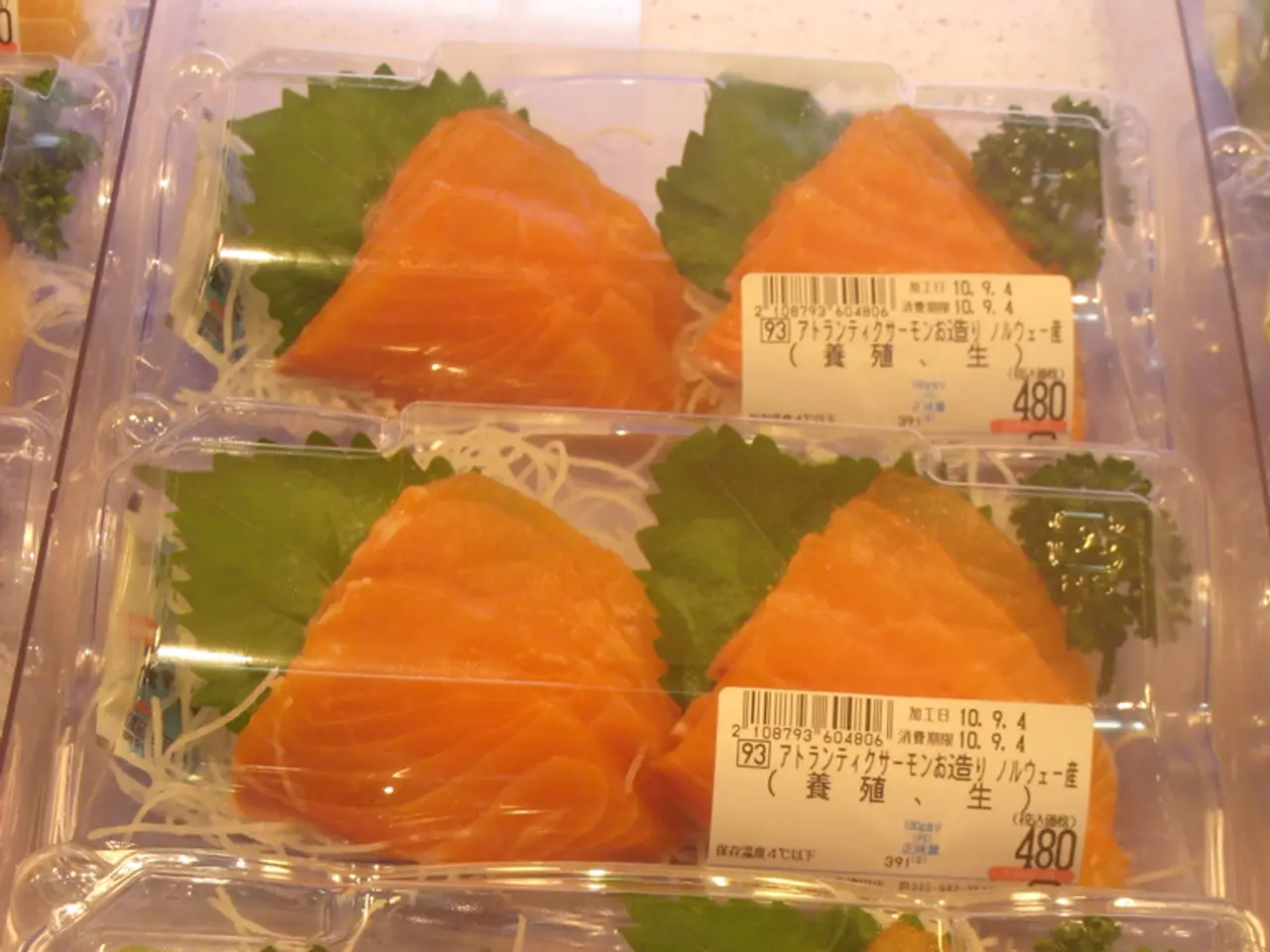
Seafood imports from particular Japanese regions are once again authorized by China
China has announced the partial lifting of a two-year ban on seafood imports from Japan, effective immediately. The decision comes following no abnormalities detected in long-term international and independent Chinese sampling and monitoring of discharged wastewater from the Fukushima nuclear power plant [1][2][4].
## Current Import Regulations
The ban on seafood imports from 10 Japanese prefectures, including Fukushima, Tokyo, Gunma, Tochigi, Ibaraki, Miyagi, Niigata, Nagano, Saitama, and Chiba, remains in effect. Seafood from these areas cannot be imported into China [1][4]. Imports from other Japanese prefectures have resumed, subject to specific regulations and restrictions [3][4].
Importers must provide a health certificate, a certificate of compliance for radioactive substance testing, and a certificate of origin for all seafood products [1][3]. These products must pass radiation checks before export from Japan [3]. Japanese seafood exporters and facilities must reapply for registration with Chinese authorities before exporting to China [1][3]. Only registered facilities may process and preserve seafood for export to China [3].
## Ongoing Monitoring and Safety Assurances
China's decision to resume imports was influenced by ongoing international and independent Chinese monitoring of Fukushima’s water discharge, which found no abnormalities [2][3][4]. Japan's commitment to ensuring the quality and safety of seafood exports also played a significant role [3][4].
## Summary
China has partially lifted its ban on seafood imports from Japan, but significant restrictions persist for the most affected regions, particularly those near the Fukushima nuclear disaster site [1][3][4]. The resumption of seafood imports from some Japanese regions does not include seafood products from the banned prefectures [1][4]. The Chinese customs will be using the provided certificates to regulate the import of seafood products from regions outside the banned prefectures [1][3]. This move reflects China’s commitment to ensuring food safety while gradually normalizing trade with Japan.
- The resumption of seafood imports from some Japanese regions follows China's commitment to environmental-science, as the ongoing international and independent monitoring of Fukushima’s water discharge, including its climate-change implications, has shown no abnormalities.
- The finance and energy sectors intertwine in this decision, as the quality and safety of seafood exports from Japan, ensured by strict industry regulations, contributed to China's assurance in resuming some seafood imports.
- In the future, as China continues to monitor the situation, the financial gain from energy-rich resources in Japan may stimulate further discussions on loosening import restrictions for seafood products, balanced with environmental-science considerations and food safety guarantees.




