
Signs point to potential turmoil for the U.S. currency?
The world of global finance is undergoing a significant shift, as the assumptions that once underpinned the dollar's dominance are no longer taken for granted. This transformation, reminiscent of past periods of geopolitical stress, sees countries increasingly seeking protection from instability and politically exposed financial assets.
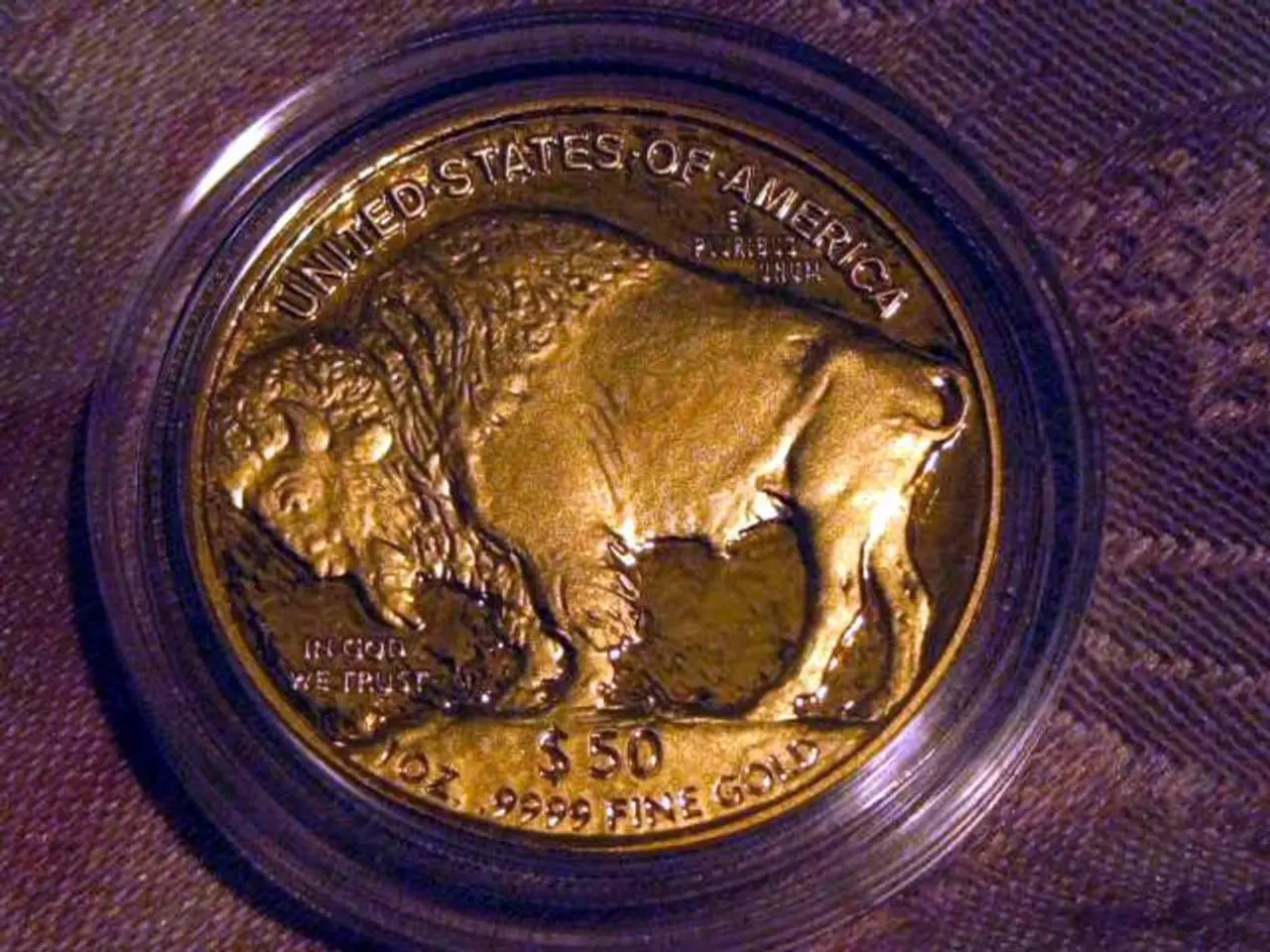
Harold James, the Claude and Lore Kelly Professor in European Studies at Princeton University, highlights this trend, noting that countries are increasing their gold holdings as a means of protection. Christopher Smart, managing partner of Arbroath Group, goes a step further, viewing digital assets as a geopolitical risk accelerant, intersecting with political populism and weakening trust in institutions, particularly in the US.
The OMFIF Bulletin brings together perspectives on this reassessment of allocation strategies due to the shift in conversations about the dollar's dominance in global finance. Yara Aziz, Senior Economist at OMFIF, is among those contributing to these discussions.
One potential alternative to the dollar is a multipolar currency system involving several major currencies such as the dollar, euro, and Chinese yuan sharing reserve status. Economist Kenneth Rogoff anticipates a future where the dollar remains dominant but shares the stage with the renminbi and euro in a diminished but still primary role, suggesting a “triumvirate” rather than a single dominant currency.
However, despite growing calls for de-dollarisation, there is still no coherent institutional framework to support a credible replacement for the dollar. Jens Søndergaard, currency analyst at Capital Group, poses the real dilemma as whether the US still wants to lead, whether the world still trusts it to do so, and whether any serious alternative to the dollar exists.
The transition away from the dollar could bring volatility due to extensive dollar-denominated debt and complex derivatives markets tied to the dollar. Brics currencies continue to face major constraints, including limited convertibility, shallow markets, and a lack of trust.
For any European safe asset to rival US Treasuries, it must be built on a foundation of fiscal responsibility, credible repayment mechanisms, and clearly defined rules. This is a challenge that Europe must address if it is to compete with the US in the global financial arena.
Meanwhile, investors are under pressure to develop concrete investment strategies in Japan as de-dollarisation accelerates. Jesper Koll, global ambassador and expert director, Monex Group, Japan, argues that a weaker yen, shifting geostrategic dynamics, and a more confident stance from domestic leadership are putting Japan back in the spotlight.
In the midst of this uncertainty, resilience is being redefined, and the focus is shifting towards managing the risks around the dollar more deliberately and being prepared for what might come next. The dollar still leads, but the world is no longer following without question.
References:
- The Economist
- Financial Times
- Bloomberg
- Project Syndicate
- As the dollar's dominance in global finance faces increased challenge, countries are turning to strategies like increasing gold holdings as a means of risk protection.
- Digital assets are seen as a potential geopolitical risk factor, intersecting with political populism and weakening trust in institutions, particularly in the US.
- One proposed alternative to the dollar is a multipolar currency system involving the dollar, euro, and Chinese yuan sharing reserve status, creating a potential triumvirate in global finance.
- Despite growing calls for de-dollarisation, there is still no coherent institutional framework to support a credible replacement for the dollar, creating a real dilemma about whether the US still wants to lead and whether any serious alternative exists.
- The transition away from the dollar could bring significant volatility due to extensive dollar-denominated debt and complex derivatives markets tied to the dollar, making it crucial for investors to develop concrete investment strategies, such as those in Japan.
- In the face of this uncertainty, public policy, economics, and business leaders are focusing on managing risks around the dollar more deliberately and being prepared for the next shift in global finance, as the world increasingly questions the dollar's unquestioned leadership.




