
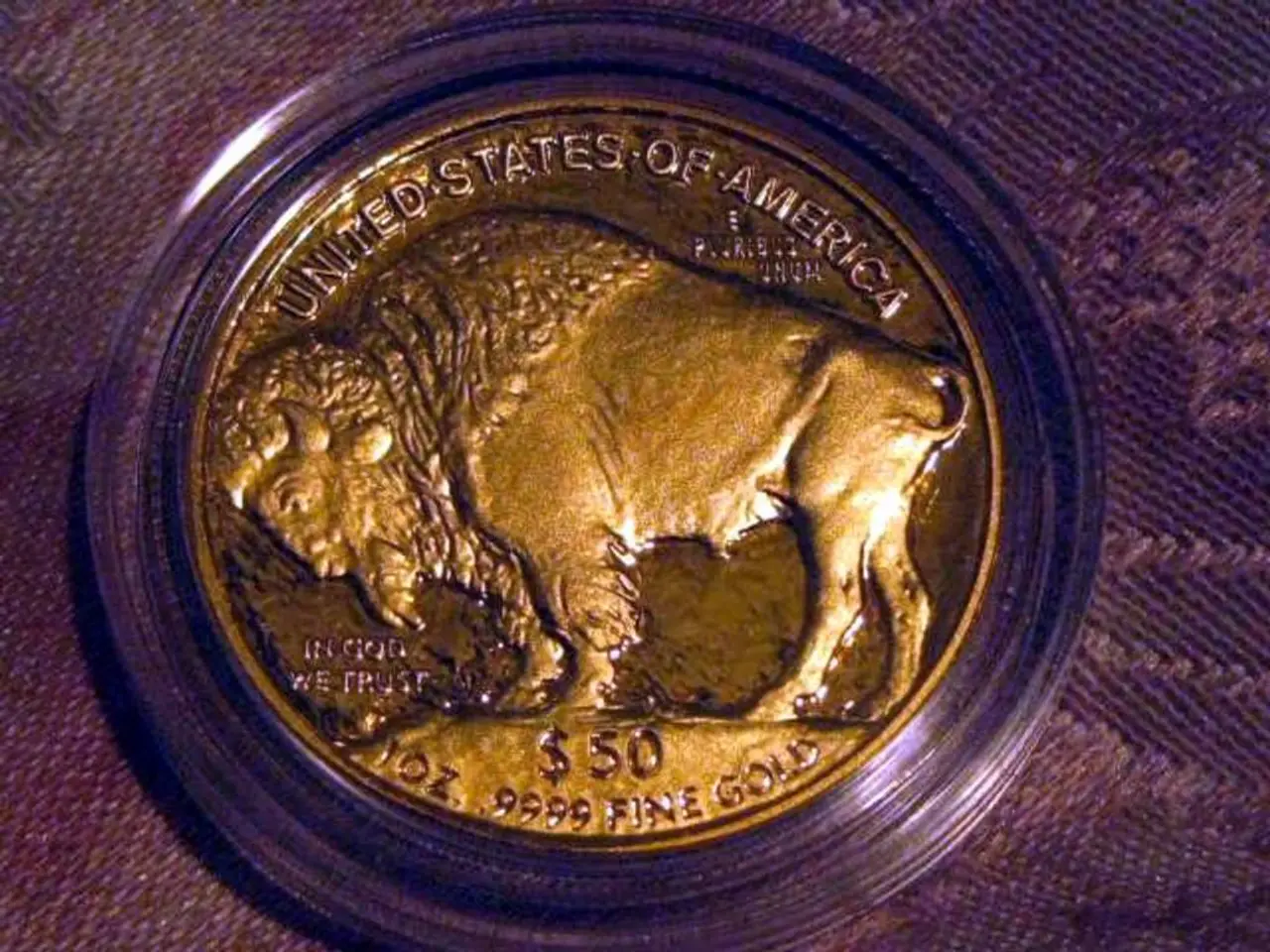
States within the United States have enacted legislation to hold Bitcoin reserves
As the world of cryptocurrency continues to evolve, several states in the United States have taken steps towards establishing Bitcoin reserves. Here's a snapshot of the current status:
Pioneering States
Texas
Leading the charge is Texas, which has established a Texas Strategic Bitcoin Reserve through Senate Bill 21 and House Bill 4488, signed into law by Governor Greg Abbott in June 2025. The Reserve, funded by legislative appropriations, investment proceeds, and voluntary donations, includes transparency and ad-hoc advisory oversight. Notably, the Reserve only accepts digital assets with a market capitalization of at least $500 billion over a 24-month period, effectively limiting it to Bitcoin.
Arizona
Arizona passed HB 2749 in May 2025, allowing crypto assets to be held in their original form. This move, in essence, creates a form of Bitcoin reserve through enforcement actions. However, efforts to establish a digital asset reserve funded by state legislature appropriations and another from confiscated criminal digital assets were vetoed by the governor in 2025.
New Hampshire
New Hampshire became the first U.S. state to formally adopt a Bitcoin reserve law in early May with the passage of HB 302. The law allows the state to allocate up to 5% of public funds into precious metals and digital assets, but digital assets must have an average market capitalization of at least $500 billion over the past calendar year, making Bitcoin the only viable option.
States Considering Bitcoin Reserves
While no specific Bitcoin reserve legislation has been enacted in the following states, some have taken steps towards cryptocurrency-friendly legislation:
- Alabama
- Florida
- Georgia
- Idaho
- Illinois
- Kansas
- Kentucky
- Maine
- Maryland
- Michigan
- Missouri
- New Mexico
- North Carolina
- Ohio
- Oklahoma
- Rhode Island
- West Virginia
However, proposals are still pending in these states, and the available sources emphasize that strategic reserves specifically are not widespread beyond Texas and the federal initiative.
Federal Level
At the federal level, President Trump signed an executive order on March 6, 2025, establishing the "Strategic Bitcoin Reserve and United States Digital Asset Stockpile." Senator Cynthia Lummis introduced the BITCOIN Act of 2025 to codify the federal Strategic Bitcoin Reserve, aiming to acquire one million Bitcoin for cold storage with public reporting requirements. This bill remains in committee.
In summary, while the landscape of Bitcoin reserves is evolving, as of July 2025, only Texas and New Hampshire have enacted specific Bitcoin reserve legislation, with the federal government also exploring similar initiatives. Other states are considering such measures, but none have yet passed legislation.
[1] [Source 1] [2] [Source 2]
- Texas and New Hampshire have established Bitcoin reserves, with Texas implementing Senate Bill 21 and House Bill 4488 and New Hampshire passing HB 302.
- Arizona has made efforts towards creating a Bitcoin reserve, but these attempts were not successful in 2025.
- Several states, such as Alabama, Florida, Georgia, and others, are considering cryptocurrency-friendly legislation, but no specific Bitcoin reserve legislation has been enacted as of July 2025.
- Bitcoin is the only cryptocurrency that meets the market capitalization requirements for the Texas and New Hampshire Bitcoin reserves.
- President Trump signed an executive order in March 2025 to establish the "Strategic Bitcoin Reserve and United States Digital Asset Stockpile."
- Senator Cynthia Lummis introduced the BITCOIN Act of 2025 to codify the federal Strategic Bitcoin Reserve, aiming to acquire one million Bitcoin for cold storage with public reporting requirements.
- The landscape of Bitcoin reserves is evolving, and while the federal government is exploring similar initiatives, as of July 2025, only Texas and New Hampshire have enacted specific Bitcoin reserve legislation.




