
Businesses Eye Opportunities in Thuringia's Wind Energy Sector - Thuringia's Wind Energy Potential Captures Interest of Businesses
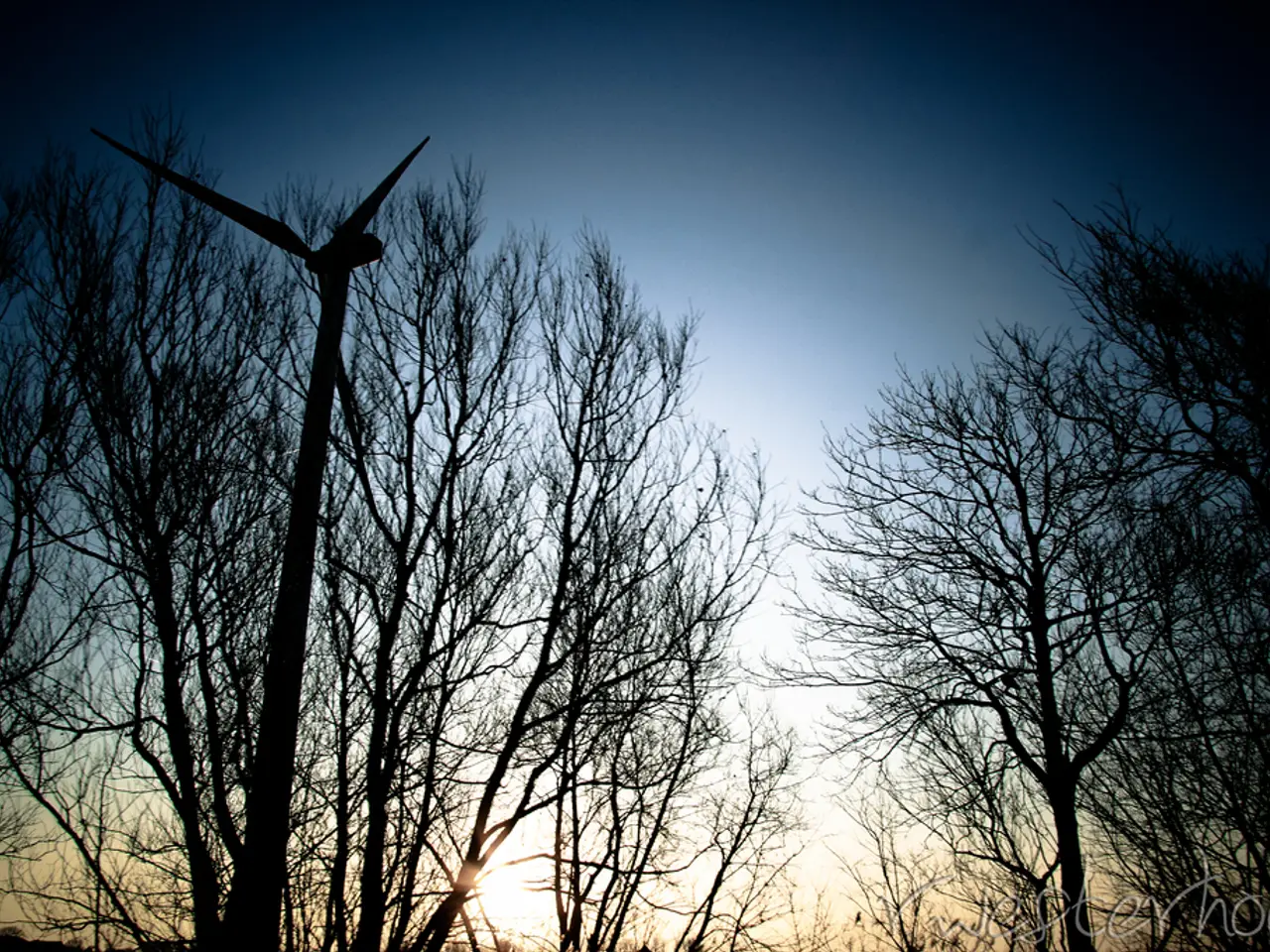
In the heart of Germany, the state of Thuringia is witnessing a significant shift towards renewable energy, with plans to expand wind turbine areas aiming to boost its capacity. However, this expansion has sparked tensions between companies developing wind farms and local communities, particularly citizen initiatives.
Günter Peupelmann, chairman of the Bürgerinitiative Holzland, a group representing citizens opposing wind turbine construction in the Saale-Holzland district council, voices concerns about potential forest loss due to wind turbine construction. This concern is shared by other local groups, as the opposition to wind turbine construction in the region is not limited to the Bürgerinitiative Holzland.
Companies such as UKA (Umweltgerechte Kraftanlagen GmbH & Co. KG) are actively engaged in expanding wind turbine projects in Thuringia. UKA has recently ordered 64 new turbines from the Nordex Group, with a total capacity of 435.2 MW, planned for deployment across various sites in Thuringia. This substantial investment in wind energy infrastructure reflects a commitment to enlarging renewable energy capacity in the region.
Similar efforts are underway in other German states, such as Schleswig-Holstein, where old turbines are being replaced with more efficient and powerful new units, increasing output significantly.
To ease conflicts, there is a push toward involving citizens financially and as co-owners in wind projects. This approach has been successful in Schleswig-Holstein, where community energy companies have been included as co-owners, promoting regional value creation and acceptance. Similar efforts are emerging in Thuringia through state laws promoting municipal and resident engagement.
The German Wind and Solar Agency has enhanced tools to inform municipalities of their financial participation rights and possible payments from wind turbine operators. This transparency aims to improve dialogue and acceptance but also highlights the complexities and varying financial benefits local governments can expect, which can be a source of dispute when interests diverge.
Conflicts often arise when residents or citizen initiatives express concerns about landscape changes, noise, and environmental impacts versus companies' goals of maximizing renewable energy output to meet climate targets. While companies emphasize the benefits of renewable energy and regional economic gains, some local citizens resist due to perceived negative effects on quality of life or insufficient inclusion in decision-making or profit-sharing.
In light of these tensions, transparent communication and equitable participation are crucial to balancing development and community interests. The public participation procedure for East Thuringia is already underway, and it is planned for North Thuringia this year. By fostering open dialogue and ensuring that local voices are heard, Thuringia can pave the way for a successful and sustainable transition to renewable energy.
- The EC countries' energy policy is witnessing a significant focus on renewable energy, as seen in the heart of Germany, in Thuringia, with plans to expand wind turbine areas aiming to boost renewable energy capacity.
- In Thuringia, there is a growing divide between companies developing wind farms, such as UKA, and local communities, particularly citizen initiatives, as concerns about forest loss due to wind turbine construction surface.
- The science of environmental-science and the climate-change awareness drive investments in renewable energy, with companies like UKA ordering new turbines from the Nordex Group, signifying a commitment to enlarging renewable energy capacity in Thuringia.
- To address conflicts between companies and local communities, some German states, like Schleswig-Holstein, have successfully involved citizens financially and as co-owners in wind projects, promoting regional value creation, acceptance, and fostering a smooth transition to renewable energy.




